
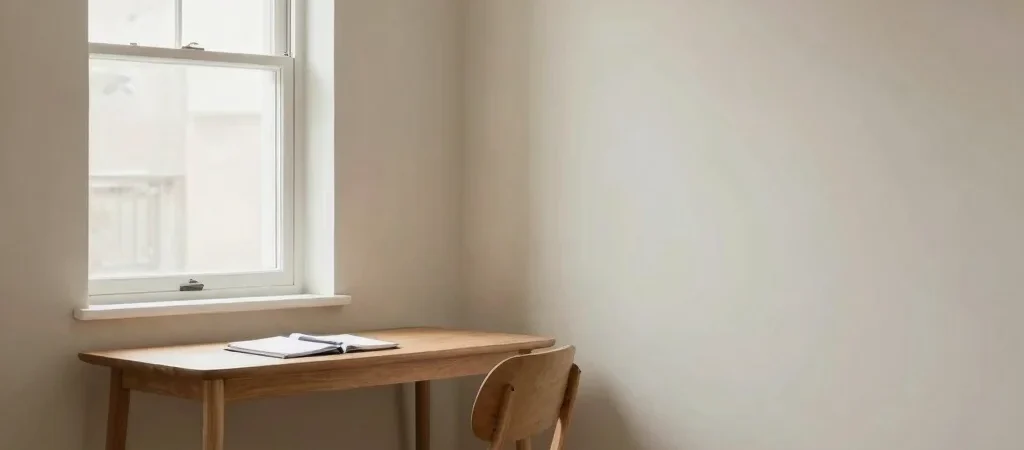
In a studio, the same corner may need to work as a reading spot, a desk, and a place to put your bag. That is not a layout problem you have to solve by adding separate furniture for every activity. A few clear boundaries can help one area change roles without leaving yesterday’s work in the way.
Give Each Use a Boundary
Start by deciding what the corner needs to support and what can live elsewhere. A desk surface might hold a lamp and a laptop during work hours, while a notebook returns to a drawer or a single container afterward. Keep the chair’s path clear so it can move between the desk and the window without knocking into a side table.
Make the Reset Reversible
Use objects you can move easily: a small tray for current work, a cushion for reading, or a freestanding basket for the bag you carry each day. There is no need to attach shelves or change fixtures to make the shift. When the work session ends, return only the items that belong to it; a short reset is more sustainable than a complicated cleanup.
Protect the Open Floor
In a compact room, the empty space around a chair matters as much as the furniture itself. Avoid filling every gap with a stool or storage cube if it makes the route from the bed to the kitchen awkward. Try the arrangement for a few days, then move one item at a time until the corner changes jobs with less effort.